Location: 800 Battery Avenue SE Atlanta GA 30339

Acoustic Emission
Sensors
Advanced sensors for passive, continuous monitoring of cracks, leaks, and stress-induced structural changes
Acoustic Emission (AE) Sensors for Real-Time Structural Health Monitoring
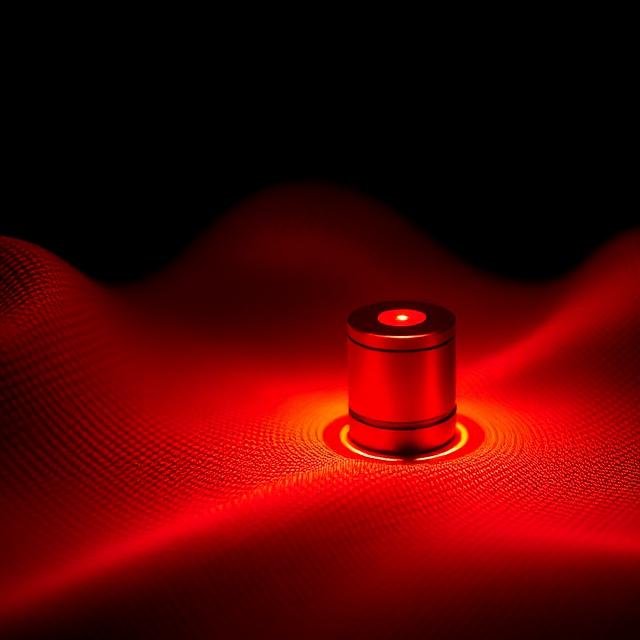
Acoustic emission sensors provide real-time insight into the structural health of materials and systems by detecting transient stress waves caused by crack growth, deformation, and other failure mechanisms.
Unlike conventional ultrasonic testing methods that rely on active signal transmission, AE technology passively listens for high-frequency acoustic events generated within a stressed structure.
This passive monitoring approach makes AE sensors ideal for continuous surveillance, early warning systems, and dynamic condition assessment of critical infrastructure and industrial assets.
Acoustic Testing Pro supports B2B clients across North America with advanced AE sensor solutions designed for pipeline monitoring, pressure vessel safety, and research diagnostics, helping extend asset life and reduce inspection costs.
Core Components
Hardware Products (from GAO Tek & GAO RFID)
- GAO Tek Wideband AE Sensor
Detects high-frequency stress waves in metals, composites, and ceramics—suitable for crack formation and leak detection. - GAO Tek Resonant Acoustic Emission Probe
High-sensitivity sensor tuned to 150 kHz or 300 kHz for targeted monitoring applications in pressure vessels or pipelines.
- GAO Tek Low-Profile Surface AE Sensor
Ideal for installation in tight or curved locations—used for structural monitoring in aerospace and automotive systems. - GAO RFID AE Signal Logger & Transmitter
Captures AE events and transmits data wirelessly to cloud or SCADA platforms for real-time review and archival.
Software
- GAO Tek AE Event Analysis Software (AEEAS)
Provides event localization, signal characterization, waveform trending, and source triangulation.
- GAO RFID IoT Gateway & Middleware
Collects and transmits acoustic emission data from multiple locations for centralized monitoring and remote diagnostics.
- Passive Detection – No external excitation needed; sensors capture naturally occurring structural emissions
- Real-Time Monitoring – Supports 24/7 surveillance of structures under load, pressure, or environmental stress
- Event Characterization – Filters and classifies signals to distinguish between cracks, leaks, friction, or impact
- Multi-Sensor Array Capability – Enables triangulation and source location for large or complex structures
- High Environmental Tolerance – Resistant to industrial contaminants, vibration, and temperature extremes
- Works with standard AE DAQ systems, digital oscilloscopes, and field loggers
- Integrates with GAO Tek software, RFID-based systems, and IoT gateways
- Interfaces with SCADA, Modbus, or Ethernet-based industrial platforms
- Compatible with data analytics tools for AI-driven anomaly detection
- Structural integrity monitoring of bridges, towers, and tanks
- Pipeline leak detection and pressure vessel surveillance
- Crack detection during fatigue and cyclic load testing
- Stress corrosion monitoring in high-risk environments
- Oil & Gas and Petrochemical
- Civil and Structural Engineering
- Aerospace and Defense
- Power Generation and Utilities
- Heavy Manufacturing and Metal Fabrication
- Research and Development Laboratories
- ASTM E1316 – Standard Terminology for AE Testing
- ASTM E750 – AE Sensors and Instrumentation Guidelines
- ASME Section V, Article 13 – Acoustic Emission Examination
- ISO 12763 – AE Methods for Leak Detection
- CSA Z662 Annex M (Canada) – AE Monitoring for Pipelines
Acoustic Testing Pro Acoustic Emission Sensors Implementation Cases for Structural Health and Asset Integrity
United States Implementation Cases
Pipeline Integrity Monitoring, Williston, North Dakota
Implementation Case | Engineering Case for Linear Assets
Problem
A high-pressure transmission pipeline experienced fatigue loading from thermal cycling and variable flow rates. Periodic ultrasonic inspections failed to capture early-stage crack initiation between inspection intervals, creating exposure to unplanned shutdowns.
Solution
Acoustic emission sensors supplied and integrated by Acoustic Testing Pro were installed along critical weld zones. Passive acoustic monitoring captured transient stress-wave activity during live operation. Multi-sensor correlation supported event localization without interrupting throughput.Result
Early crack-related emissions triggered mitigation before wall penetration, avoiding an estimated $250,000 in damage control costs.Lesson
Continuous acoustic emission monitoring increases data volume and requires disciplined signal classification to manage false positives.
Composite Pressure Vessel Testing, Wichita, Kansas
Implementation Case | Proof of Implementation for Aerospace Structures
Problem
Fatigue testing of composite pressure vessels required detection of micro-cracking prior to visible delamination. Conventional strain gauges lacked sensitivity to early damage modes.Solution
Low-profile acoustic emission sensing elements were bonded to curved composite surfaces. Acoustic Testing Pro supported sensor placement and waveform characterization to distinguish matrix cracking from fiber breakage.
Result
Micro-crack activity was detected several test cycles before visual inspection thresholds, improving qualification confidence while maintaining compliance with aerospace test protocols.
Lesson
Sensor coupling quality directly affects repeatability in composite acoustic monitoring.
Refinery Heat Exchanger Surveillance, Houston, Texas
Implementation Case | System Design Example for Process Equipment
Problem
Shell-and-tube heat exchangers operated under corrosive conditions, with leak risk between scheduled shutdowns. Manual inspections required production interruptions.
Solution
Acoustic emission sensors were mounted externally on exchanger shells. Passive listening enabled detection of leak-induced acoustic signatures during normal operation. Data integration aligned with existing plant monitoring systems.Result
Unplanned outages were reduced by identifying early leak signatures weeks ahead of failure escalation.
Lesson
Acoustic emission sensing complements corrosion programs but does not replace material thickness measurements.
Rail Bridge Fatigue Assessment, Pittsburgh, Pennsylvania
Implementation Case | Structural Engineering Case
Problem
A steel rail bridge subjected to cyclic loading showed increasing maintenance costs without clear indicators of crack initiation points.Solution
A distributed acoustic emission sensor array monitored high-stress connections during live rail traffic. Acoustic Testing Pro assisted with threshold calibration to isolate load-induced emissions from environmental noise.
Result
Crack initiation zones were localized within a defined span length, enabling targeted reinforcement rather than full-structure intervention.Lesson
Traffic-induced acoustic noise requires careful baseline establishment during commissioning.
Wind Turbine Tower Monitoring, Amarillo, Texas
Implementation Case | Deployment Report for Renewable Assets
Problem
Tall onshore wind turbine towers experienced fatigue from variable wind loading. Visual inspections required costly crane access.
Solution
Acoustic emission sensors were installed at flange connections and weld seams. Passive acoustic monitoring captured stress-wave events correlated with wind speed and tower resonance.Result
Maintenance interventions were scheduled based on acoustic activity trends, reducing unnecessary inspections and improving uptime.
Lesson
Environmental factors such as wind-induced vibration must be accounted for during signal interpretation.
Chemical Storage Tank Floor Monitoring, Baton Rouge, Louisiana
Implementation Case | Compliance-Oriented Solution Case
Problem
Above-ground storage tanks handling corrosive chemicals faced regulatory pressure to demonstrate leak detection beyond periodic floor scans.
Solution
Acoustic emission sensing networks monitored tank floors and shell-to-floor junctions. Acoustic Testing Pro supported integration with remote monitoring dashboards for compliance documentation.
Result
Early leak-related emissions were identified without draining the tank, supporting regulatory reporting while avoiding operational disruption.
Lesson
Acoustic emission methods indicate active damage but do not quantify corrosion depth.
Aerospace Wing Fatigue Testing, Seattle, Washington
Implementation Case | Engineering Validation Case
Problem
Full-scale wing fatigue tests required real-time insight into crack initiation across multiple load paths.Solution
Arrays of acoustic emission sensors captured transient emissions during cyclic loading. Signal triangulation enabled localization across complex geometries.Result
Crack initiation events were identified before strain anomalies appeared, improving structural modeling accuracy.
Lesson
High sensor counts increase data management complexity during long-duration tests.
Offshore Platform Structural Nodes, New Orleans, Louisiana
Implementation Case | System Implementation for Marine Structures
Problem
Critical load-bearing nodes on offshore platforms experienced combined mechanical and environmental stress. Diver inspections were limited by weather windows.Solution
Acoustic emission sensors were installed within protected housings. Passive monitoring detected stress-wave events associated with joint degradation.Result
Condition-based maintenance reduced reliance on reactive inspections, improving safety planning.Lesson
Marine environments demand rigorous sensor sealing and periodic verification.
High-Voltage Transformer Monitoring, Phoenix, Arizona
Implementation Case | Electrical Asset Monitoring Case
Problem
Transformers subjected to thermal cycling exhibited insulation degradation risk. Dissolved gas analysis lacked temporal resolution for transient events.
Solution
Acoustic emission sensing captured partial discharge-related acoustic signatures. Data correlation supported differentiation between mechanical and electrical sources.Result
Early identification of abnormal discharge activity prevented forced outages during peak demand periods.
Lesson
Acoustic emission sensing complements electrical diagnostics but requires cross-domain expertise.
Mining Conveyor Structural Health, Tucson, Arizona
Implementation Case | Industrial Deployment Case
Problem
Long conveyor systems experienced fatigue cracking at support structures, leading to production losses.Solution
Acoustic emission sensors monitored high-stress support frames during continuous operation. Event clustering identified recurrent stress zones.
Result
Targeted reinforcement reduced unscheduled stoppages and improved safety outcomes.
Lesson
Dust and vibration necessitate robust sensor mounting strategies.
Cryogenic Storage Vessel Monitoring, Pasadena, California
Implementation Case | Technical Case for Extreme Temperatures
Problem
Cryogenic vessels faced thermal contraction stresses with limited inspection access during operation.Solution
Acoustic emission sensors rated for temperature extremes monitored vessel walls during fill and discharge cycles.
Result
Stress-related acoustic activity informed operational limits without interrupting service.Lesson
Temperature effects on sensor sensitivity require compensation during analysis.
Highway Overpass Assessment, Columbus, Ohio
Implementation Case | Public Infrastructure Use Case
Problem
An aging concrete overpass exhibited uncertain crack propagation under increasing traffic loads.
Solution
Acoustic emission sensors embedded near reinforcement zones detected micro-fracture activity during peak traffic periods.Result
Data-supported repair prioritization reduced lifecycle maintenance costs.Lesson
Concrete acoustic emission signals require material-specific interpretation models.
Industrial Boiler Drum Monitoring, Gary, Indiana
Implementation Case | Process Safety Case
Problem
Boiler drums operated under cyclic pressure with limited visibility into crack initiation.
Solution
Acoustic emission monitoring captured stress-wave emissions during pressure ramps. Acoustic Testing Pro supported alarm threshold development.
Result
Early detection of abnormal emissions enabled planned shutdown rather than emergency response.Lesson
Operational load changes must be documented to contextualize acoustic data.
Space Vehicle Test Stand Structures, Cape Canaveral, Florida
Implementation Case | High-Energy Structural Testing Case
Problem
Launch support structures experienced extreme transient loads during engine testing, with limited tolerance for failure.Solution
Dense acoustic emission sensor arrays monitored load-bearing members during test firings.
Result
Stress-induced emission patterns validated structural margins without intrusive instrumentation.
Lesson
High-energy acoustic environments require careful sensor saturation management.
Canadian Implementation Cases
Pipeline Weld Monitoring, Fort McMurray, Alberta
Implementation Case | Energy Infrastructure Engineering Case
Problem
Thermal cycling in heavy crude pipelines increased weld fatigue risk beyond periodic inspection coverage.Solution
Acoustic emission sensors monitored weld clusters under live operating conditions. Passive acoustic monitoring supported early crack detection.
Result
Potential failure points were identified before leakage, supporting regulatory compliance and operational continuity.
Lesson
Acoustic emission data must be correlated with operating pressure histories.
Hydroelectric Penstock Assessment, Kamloops, British Columbia
Implementation Case | Renewable Energy Structural Case
Problem
Steel penstocks experienced cyclic pressure fluctuations with limited access during operation.Solution
Acoustic emission monitoring captured stress-wave activity during load changes. Data analysis supported source localization along the penstock length.Result
Maintenance planning shifted from time-based to condition-informed scheduling.Lesson
Water flow noise can mask low-energy acoustic events without proper filtering.
Above-Ground Storage Tank Surveillance, Edmonton, Alberta
Implementation Case | Regulatory Compliance Case
Problem
Large chemical storage tanks required continuous leak surveillance to meet provincial safety requirements.
Solution
Acoustic emission sensing networks monitored tank floors and shell regions. Remote data access supported centralized oversight.
Result
Early leak indicators were detected without service interruption, supporting compliance audits.Lesson
Acoustic emission sensing detects active leaks but does not replace integrity testing.
Rail Infrastructure Fatigue Monitoring, Winnipeg, Manitoba
Implementation Case | Transportation Infrastructure Case
Problem
Cold climate rail infrastructure experienced brittle fracture risk during winter operations.Solution
Acoustic emission sensors monitored critical joints during temperature transitions and live traffic loading.
Result
Crack initiation events were identified under extreme conditions, informing targeted reinforcement.
Lesson
Temperature-related material behavior must be considered in acoustic interpretation.
Research Reactor Structural Testing, Chalk River, Ontario
Implementation Case | Research Diagnostics Case
Problem
Experimental reactor components required non-intrusive monitoring during controlled stress testing.
Solution
Acoustic emission sensors supported passive detection of micro-damage without interfering with experimental setups.
Result
High-resolution acoustic data improved understanding of material behavior under irradiation-related stress.Lesson
Laboratory-grade calibration improves data fidelity but increases setup time.
Explore Other Categories That Are Available Under
Related Acoustic and Ultrasonic Testing Technologies You May Be Interested In:
Looking to deploy advanced acoustic emission monitoring for your assets or testing lab?
Acoustic Testing Pro offers scalable AE sensor systems, expert integration, and full technical support.
Contact Us today for consultation, pricing, or to request a live system demo.